
NOTES FROM THE ARCHIVE
What can residencies do?
On 22 August, AFA hosted art historian and author Karin Zitzewitz for a lecture on 'Residencies as an Infrastructural Form', drawing on her research into South Asian contemporary art networks and her experience founding a university-based residency programme at Michigan State University.
WRITTEN BY
Prachi Satrawal

On 22 August, AFA hosted art historian and author Karin Zitzewitz for a lecture on residencies as a form of art infrastructure, drawing on her research into South Asian contemporary art networks and her experience founding a university-based residency programme at Michigan State University.
Zitzewitz approached the residency through three axes “sociality, site, and economy”, asking how each can intervene in the conditions of artistic practice to create possibilities that more permanent structures may resist.
Her first case study was the Triangle Network, founded in 1983 by Anthony Caro and collector Robert Loder, and rooted in South Asia from 1997 through initiatives including Khoj, Vasl, Britto, Sutra, and Theertha. At the heart of her reading was Loder’s insistence that “artists need space to work in, stimulus, people to talk to, an audience, and, above all, freedom.” For Zitzewitz, this question of what artists actually need, rather than what institutions assume they need, became a touchstone.
She traced how Triangle’s deliberately lean, two-week, artist-led and anti-institutional format shaped the kinds of practices that emerged from it, from Lala Rukh’s oil-and-sand installation at Gadani to Hema Upadhyay’s matchstick chandeliers made during a Vasl residency in Karachi. The model, she argued, provided a framework without content and its refusal of a fixed ideology allowed it to remain flexible across decades and geographies. Equally significant was its often-underacknowledged South-South orientation, with much of the movement it generated taking place between countries of the Global South.
Her second case study was the Artist Residency in Critical Race Studies through Creative Practice, which she founded and directed at Michigan State University between 2017 and 2022. Over five years, nine visiting artists were each selected for one year residency. They taught half the usual faculty load, freeing substantial time for their own practice, they were given studio space, access to technical support, and a budget to produce a solo exhibition at the end of the year. Most importantly, when they left, they took their work with them. Zitzewitz described this as a gift economy, where the point was to pay it forward.
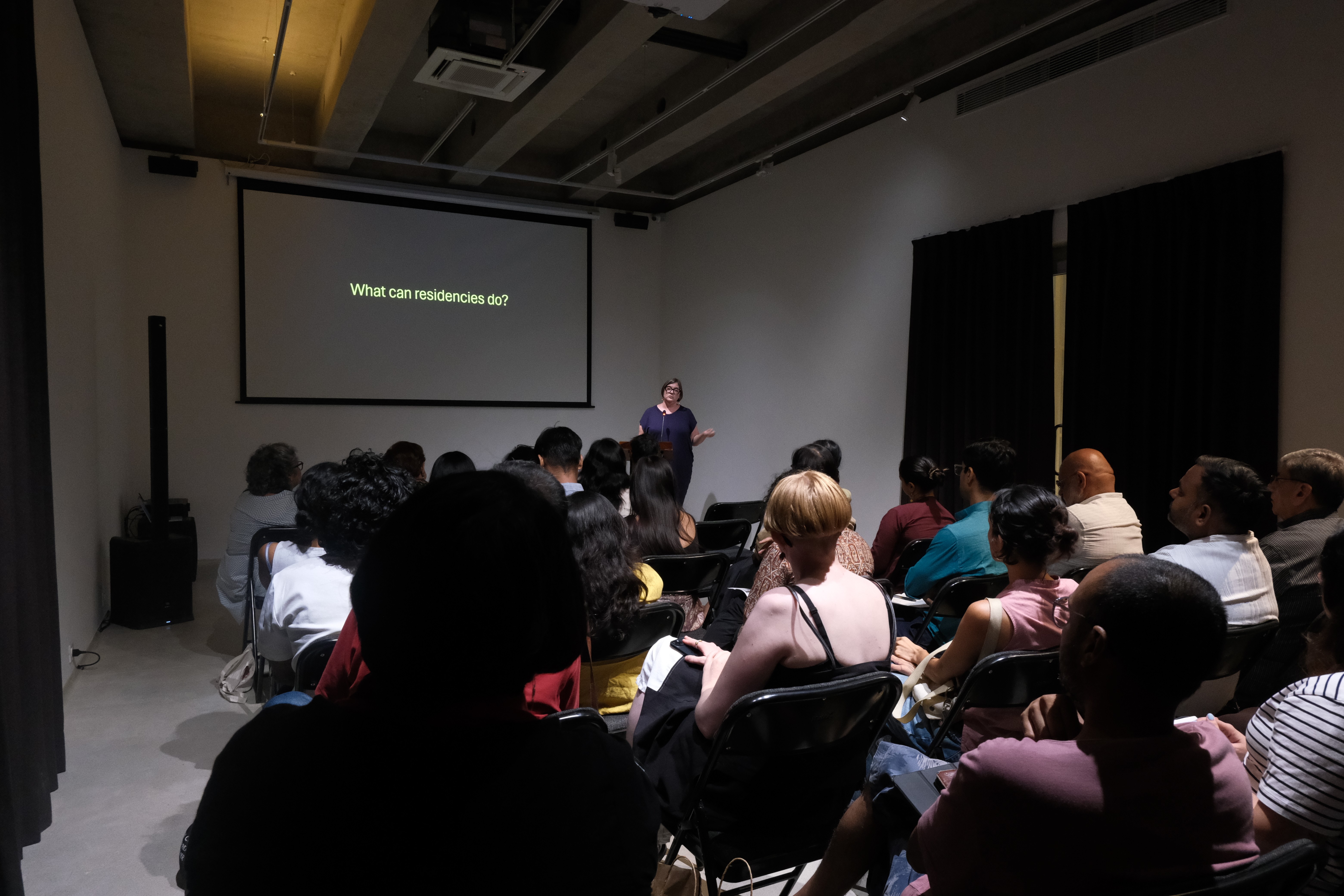


Across both cases, Zitzewitz proposed that the residency’s strength lies in its temporariness, nimbleness, and centering of the artist over the curator, gallerist, or institutional organiser. Its success, she suggested, should be measured by "the creativity it makes possible".
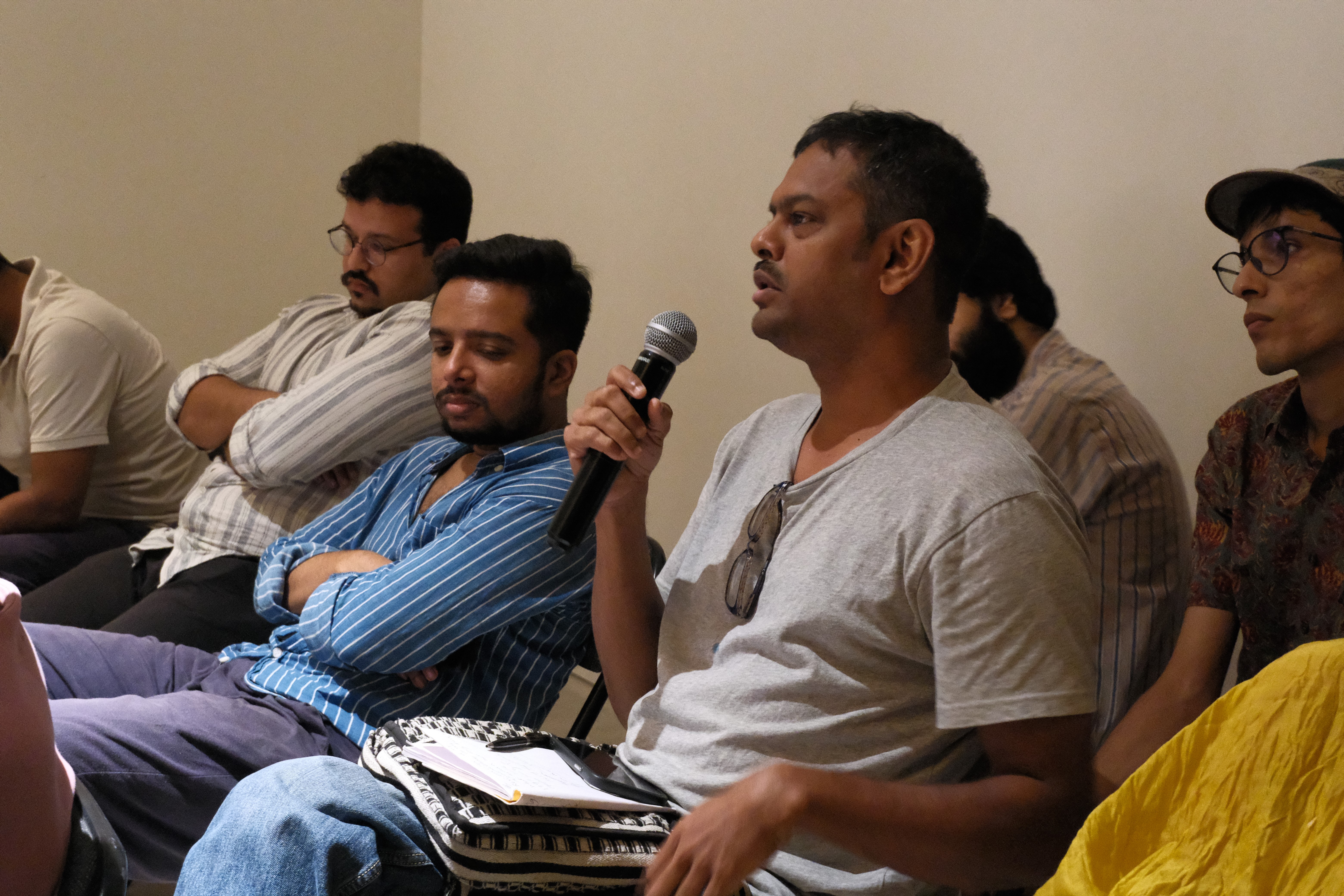
The Q&A opened these questions further.
Who funds the growing number of private residencies in India, and how might patronage shape what artists can make, show, or sell? Does the South-South circulation of the Triangle Network carry the same weight in our histories as its better-known connections to London’s Gasworks? How should we distinguish the workshop from the residency as institutional forms? And where and when Indian precedents, such as the Kasauli Art Centre, Garhi Studio Complex, and Lalit Kala Academy, need to be brought into this history ? Moreover, the discussion questioned the language of the open call itself. When residencies are framed as “opportunities” rather than responses to artistic needs, whose needs are actually being addressed, and how many?
These questions on form, freedom, temporariness, exclusivity, patronage, and who art infrastructure ultimately serves stayed with the audience. We hope to continue to unravel them in the conversations to come.

NOTES FROM THE ARCHIVE
What can residencies do?
A reflection on the talk by Karin Zitzewitz exploring the role and nature of residencies and the conversations that followed.


