
NOTES FROM THE ARCHIVE
Studio to the Street - Sites of Practice
The inaugural edition of Moving Images, curated by Prachi Satrawal, brought together four films from the Goethe-Institut / Max Mueller Bhavan archive across two evenings to think through the conditions that shape art making. 'The Question of Making' moved from the studios of Hermann Glöckner and Jörg Immendorff to the streets, cafés and bookshops of Ulrike Ottinger’s Paris, offering glimpses into artists at work, and the places, histories, encounters and forms of sociability through which artistic practices are formed.
WRITTEN BY
Prachi Satrawal

The finished artwork usually arrives before us as an object that is resolved, framed, exhibited, photographed, and placed within a history. When we decided to start a film programme at the Anant Foundation for the Arts, it emerged from a lack, and a need to pay close, sustained attention to the moving image as a method and a way of witnessing the making of art. It felt only natural, then, that the inaugural edition of Moving Images would turn its gaze towards artists at work. Curated by Prachi Satrawal, The Question of Making brought together four films from the Goethe-Institut / Max Mueller Bhavan archive across two evenings, each one revealing something about the act of making. The collaboration felt generative from the outset. Looking at these films is also an exercise rooted in a kind of internationalism, a desire to forge connections across geographies through shared impulses in artistic decisions and desires, to see whether the gestures of a painter in Dresden or the wanderings of a filmmaker in Paris might speak to questions alive in our own rooms and studios.
The first evening was about entering the studio. Three films — A Brief Visit with Hermann Glöckner, Woman at the Clavichord, and Der Affe und ich — took us into the working spaces of Glöckner, Böttcher, and Immendorff respectively, each one an invitation to witness the artist in process: in hesitation, repetition, experiment, decision.
For many artists in the room, this felt like being admitted backstage at a theatre performance — a peek behind the curtain, at the accumulation of choices that precede it. To watch an artist in his nineties still searching for new affinities with the line, or to observe the slow, deliberate act of painting over an existing image, is to be reminded that making is itself a form of thinking.
The films offered a glimpse into the mind of the artist, and into the particular atmosphere of political history that saturates their studios. Mallika Visvanathan opened the conversation by situating these films within the historical circumstances of their making. Immendorff's monumental canvases accumulated personal memory and the fractured history of Germany, layer by layer. The studios in these films were sites of confrontation between the self and history.
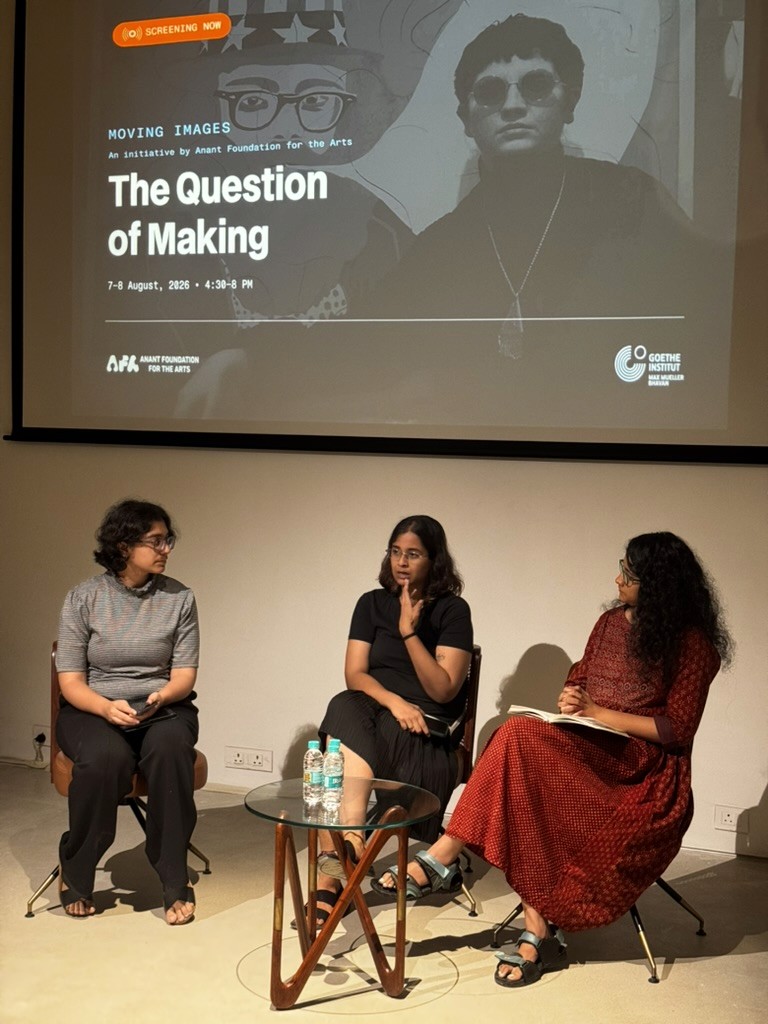
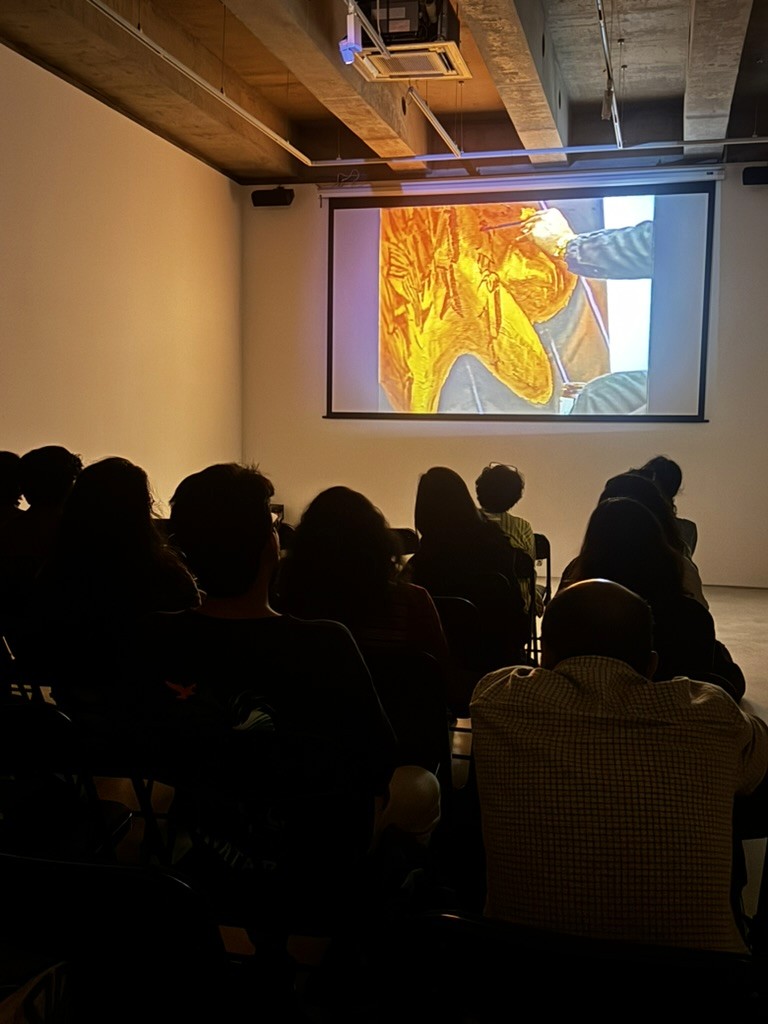
Sukanya Deb was drawn, among other things, to the construction of the artistic persona within these documentaries, and to the ways even clothing becomes revealing. Immendorff appears in workwear-like dungarees, evoking a deliberately working-class persona, while Glöckner is seen in his neat, lab-coat-like jacket, appearing like an ascetic figure. They occupy almost opposite ends of the spectrum, yet both portraits convey devotions to the labour of artistic practice, and to the persistence of working.
The second evening moved outward from the studio into the street. Ulrike Ottinger's Paris Calligrammes, an autobiographical essay film about the years the artist spent in Paris from 1962 onwards, includes the city itself as a site of artistic formation. What emerged in the discussion was how much the film's montage form of archival footage, present-day filming, and voiceover shapes our experience of memory itself. Veena Hariharan drew attention to a particular quality in the voiceover: the image of a young girl arriving in a city, wide-eyed, being narrated by the older artist looking back. It is this temporal fold of the knowing voice set against the not-yet-knowing self that gives the film its peculiar texture of nostalgia, its sense of a life being assembled in hindsight even as it unfolds.
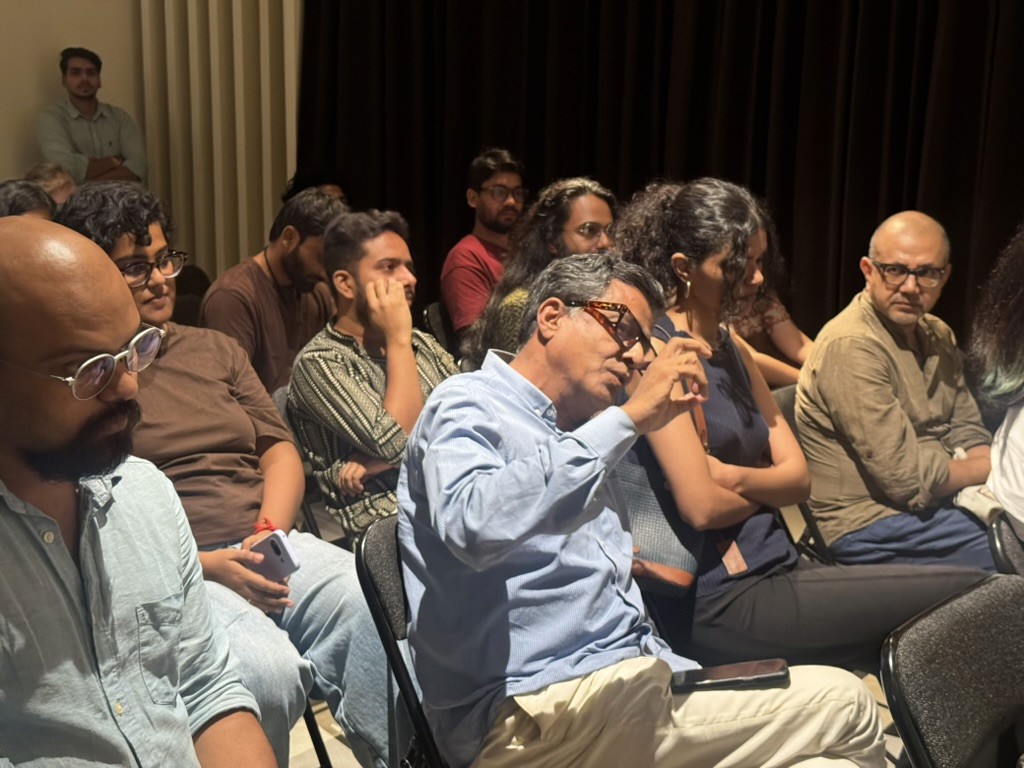

Shukla Sawant thickened the conversation by bringing it closer to home, drawing out the infrastructures of sociability and exchange that shaped artistic life in post-independence Delhi, the Garhi Studios, Lalit Kala Akademi, the particular energy of neighbourhoods like Laxmi Nagar and Mayur Vihar in Delhi. Placed alongside Ottinger’s Saint-Germain, these became similar ferments, shifting the conversation from isolated acts of making towards artistic production within a scene. Here, proximity, encounters, everyday geographies and a shared sense of urgency become part of the conditions through which an artistic practice takes shape.
NOTES FROM THE ARCHIVE
Studio to the Street - Sites of Practice
The inaugural edition of Moving Images brought together four films from the Goethe-Institut / Max Mueller Bhavan archive across two evenings to think through the conditions that shape art making.


