
The Anant Curatorial Forum is a space dedicated to curatorial practice, inviting the experiences and perspectives of practitioners engaged in dynamic, critical and meaningful explorations within the arts.
As the curatorial role extends its relevance beyond the arts into allied fields and disciplines, the Forum asks what timely re-evaluation looks like in practice. With a particular attentiveness to the South Asian context, each edition brings together voices from across the region and beyond to examine the questions shaping contemporary practice today.
Edition Overview
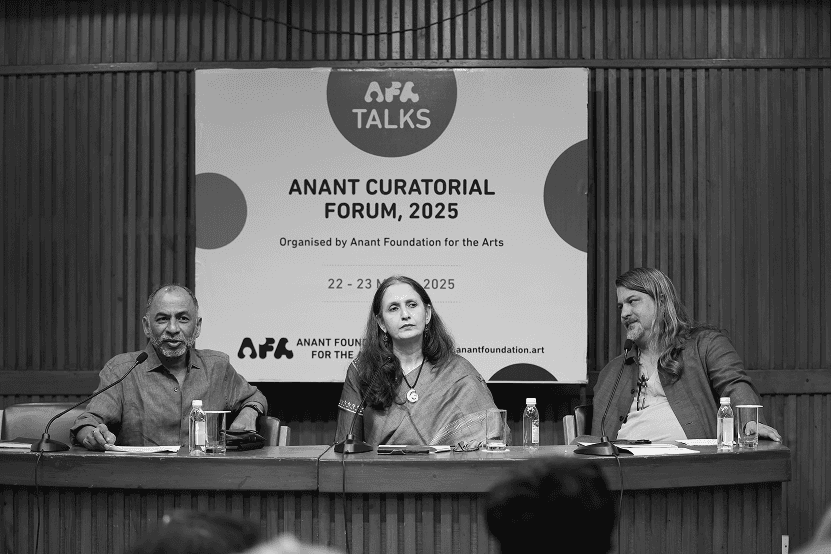
The second edition of the Anant Curatorial Forum, held on 22 and 23 March 2025 at the India International Centre, New Delhi, examined pressing issues within the contemporary context of the arts in South Asia. Over two days and six panels, practitioners from across the region and beyond brought their perspectives to questions of the archive and memory, difficult knowledges, intersectional politics, art and ecology, performance and the body, and the possibilities and challenges of collective institution-building.
06 Panels |
|---|
24 Practitioners |
DAY 1 · PANEL 1
Archive | Between Memory and History
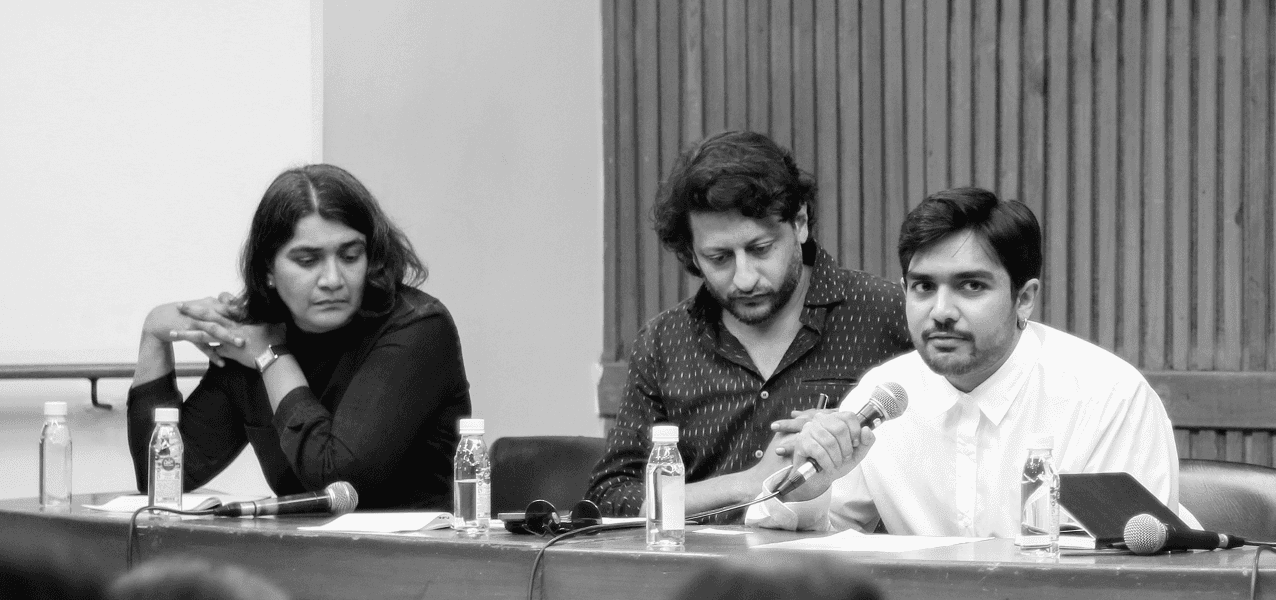
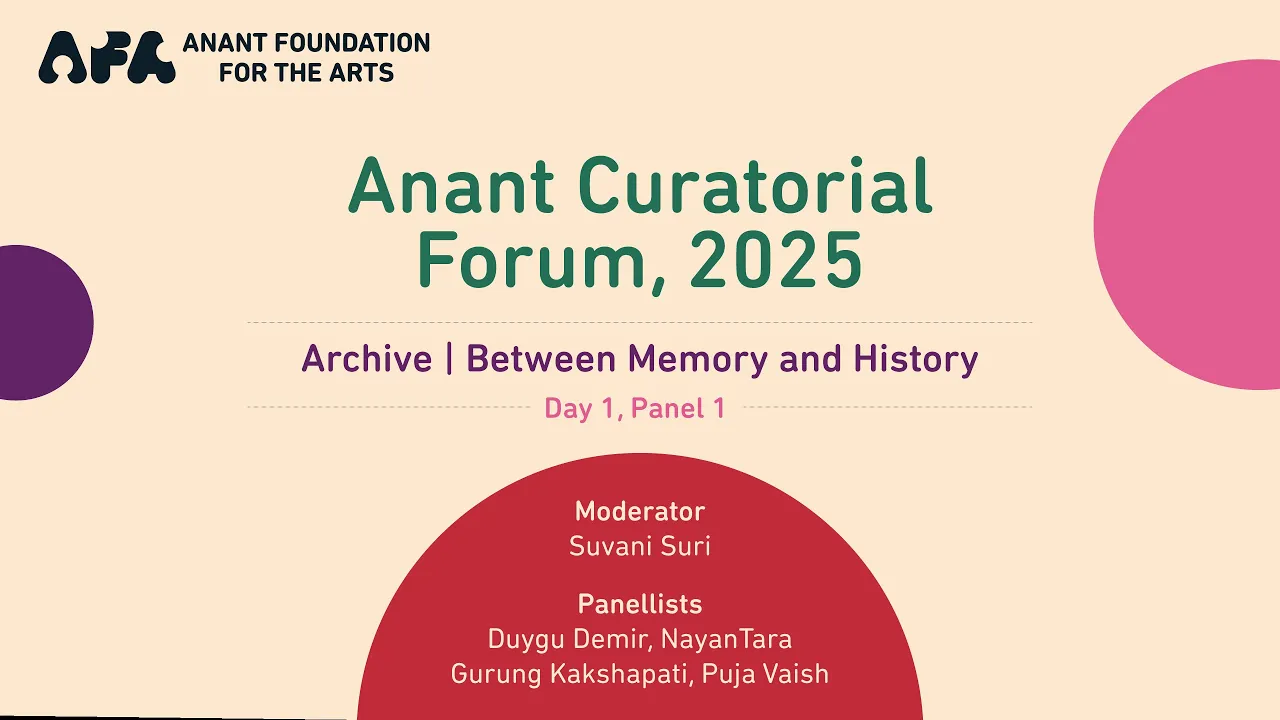
This panel interrogated a range of archival dispositions sensed and drawn out in contemporary curatorial practice. Unpacking the notion of the archive, practitioners moved between the exhibition, discursive and pedagogical modes of inquiry — generating new encounters and critical readings of archival lossiness, gaps and absences. The different tactics and interventions retraced the archiving impulse while amplifying the dissonances within histories and collections that can only be heard through an active engagement in the here and now. The tensions between history and memory, forgetting and remembering, constructed and reproduced, found and rendered were eked out in this process, disassembling the time in/of the archive and opening it up to other possible lives and configurations.
DAY 1 · PANEL 2
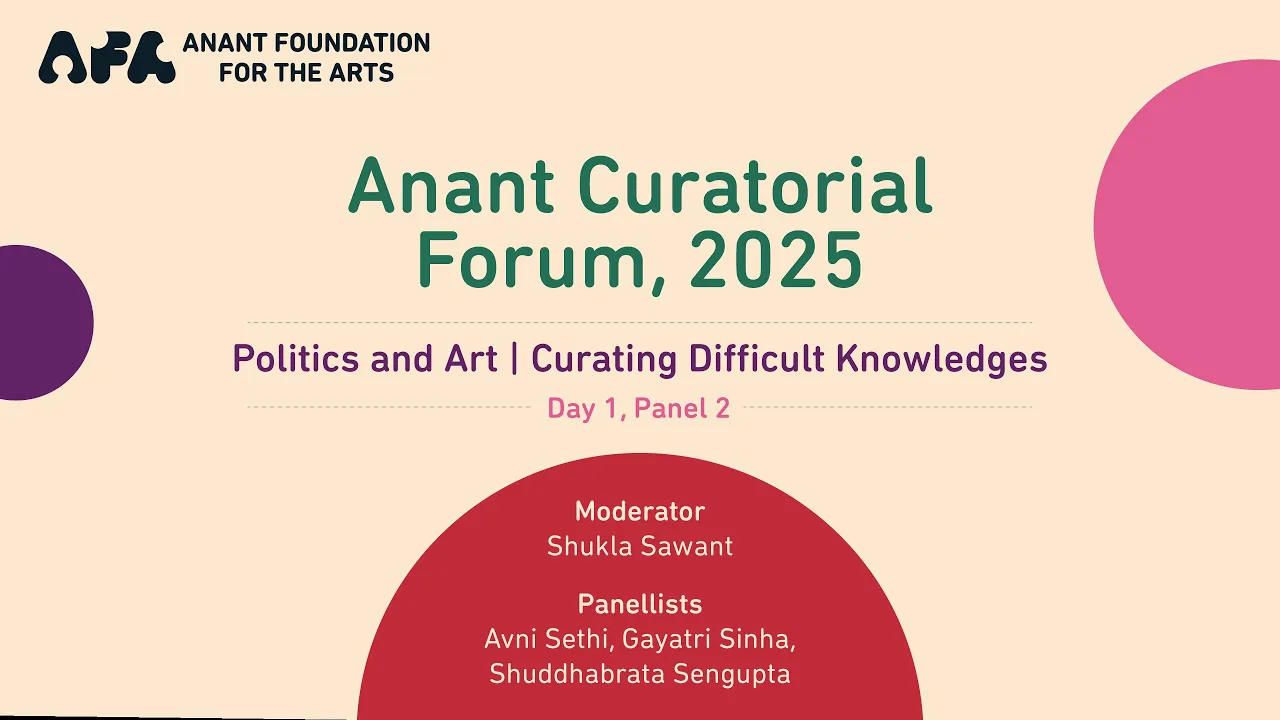
Politics and Art | Curating Difficult Knowledges
The increasing “democratisation” of technology has facilitated the fracturing of monolithic histories, allowing more politically, culturally and socially diverse articulations to come to the fore. This panel thought through curatorial judgements and strategies that facilitate collective and productive modes of “bearing witness” within spaces where difficult knowledges and public engagement converge. Curators examined different modes of memorialisation, commemoration and historicization — within the traditional frameworks of the museum, memorial sites, and exhibition-making — while questioning their capacities to document, preserve, educate and faithfully represent. The panel addressed curatorial responsibility around the acknowledgement of complicity, the treatment of testimonies, memories, documents, and contestations.


DAY 1 · PANEL 3
Intersectional Politics | Theorising Multiplicity
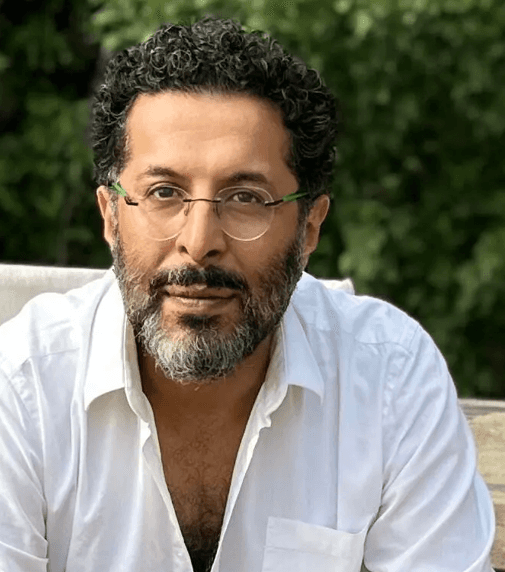
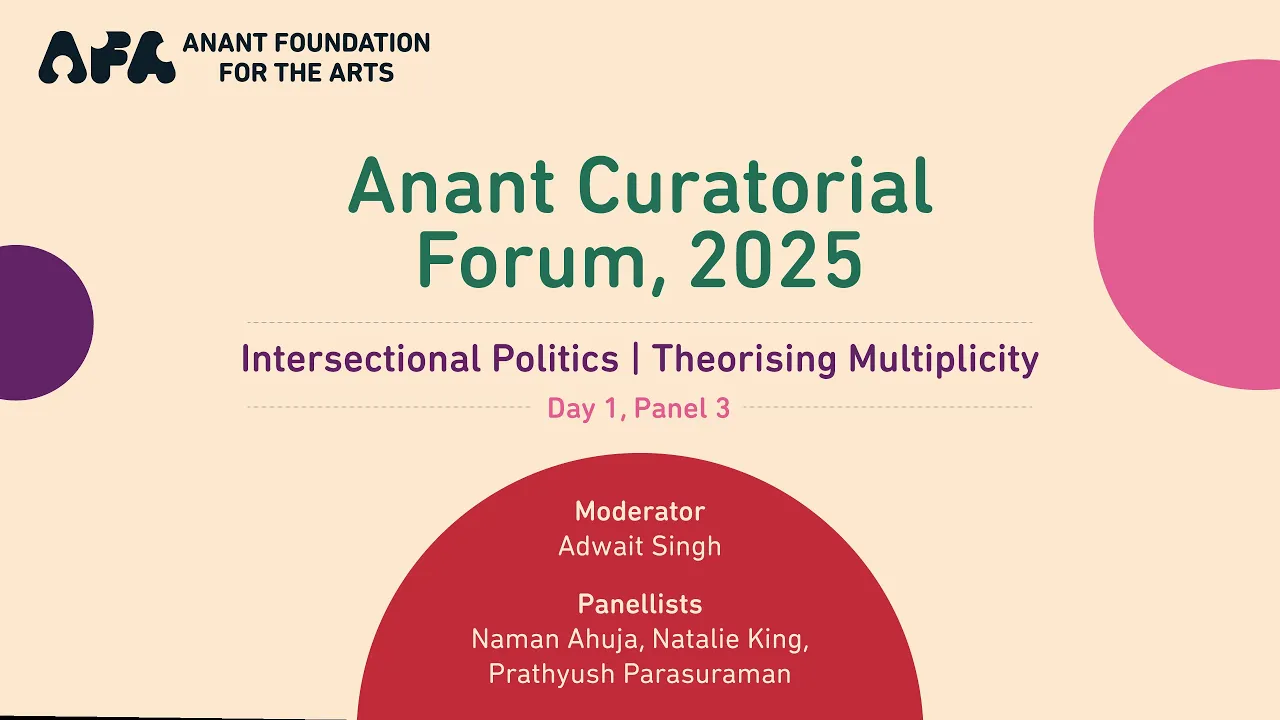
This panel examined challenges in introducing alternative histories and counternarratives to institutional contexts. How does one curate as an ally, representing a marginal position without occupying it? How are questions of censorship negotiated when presenting sensitive subjects in public spaces? What curatorial strategies ensure a favourable reception of alternative artistic perspectives — especially when the grounds are foreign? Addressing these questions, the panel upheld intersectionality as a process that merits constant attention to its shifting urgencies.



DAY 2 · PANEL 1
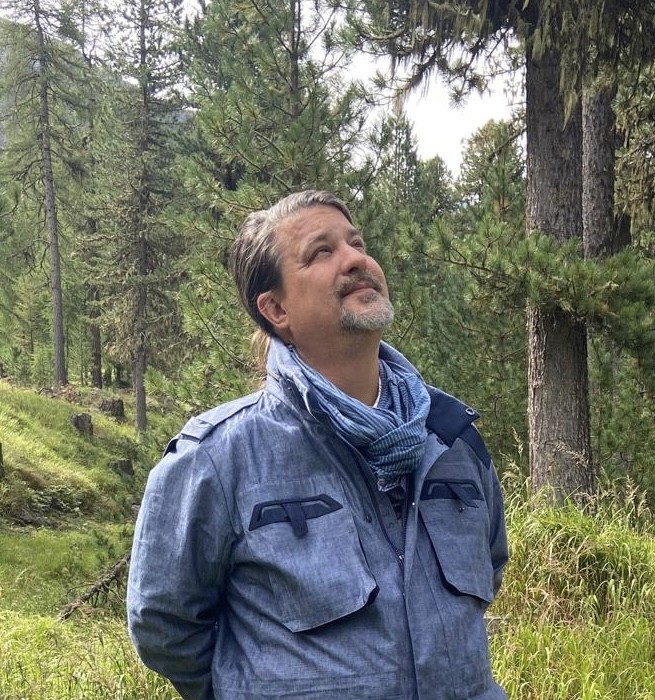
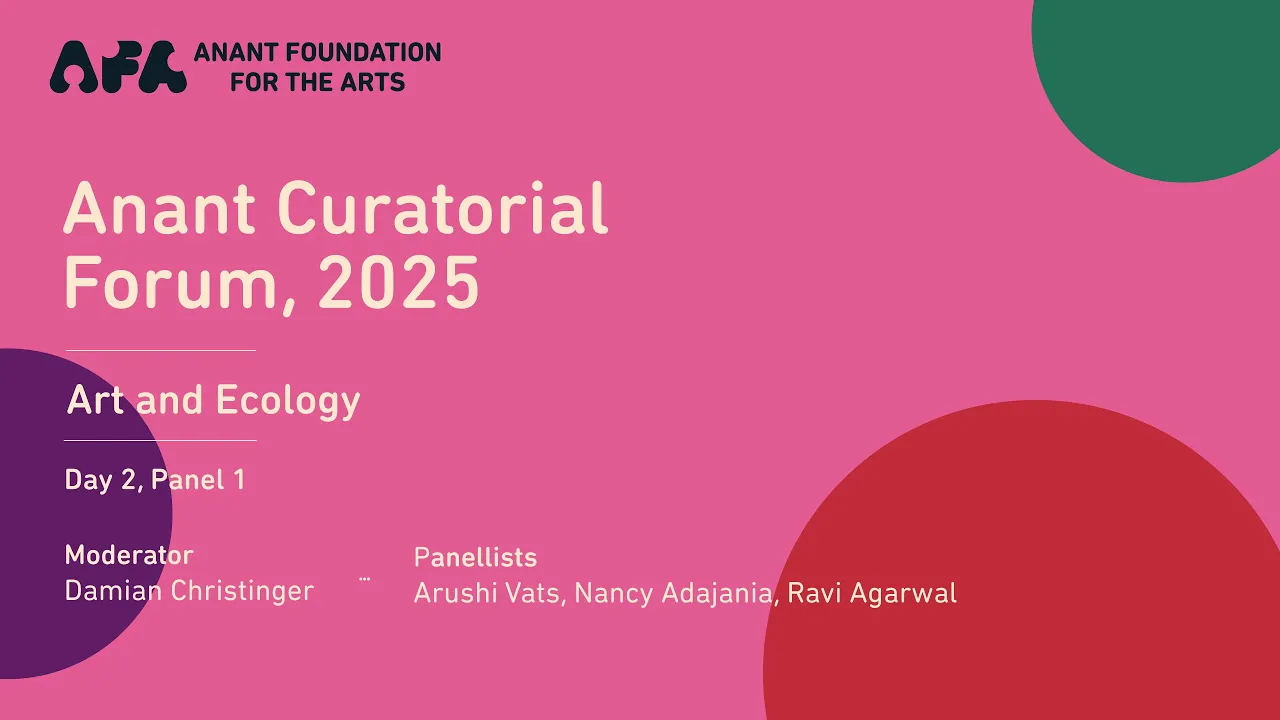
Art and Ecology
Curating at the intersection of art and ecology requires an acute awareness — both of nature's intrinsic agency and our role as cultural mediators. Consciousness in curating is more than an intellectual exercise; it is a practice of attunement, a deliberate way of engaging with both the artworks and the ecological contexts in which they emerge. A conscious approach to curating ecology in the arts begins with acknowledging nature not as a backdrop to human activity, but as an active presence with its own narratives, materialities, modes of existence, and consciousness. This panel asked how art can foster relationships of care rather than control, and how it can highlight symbiotic rather than exploitative paradigms.


DAY 2 · PANEL 2
Performance | Bodies in Grief
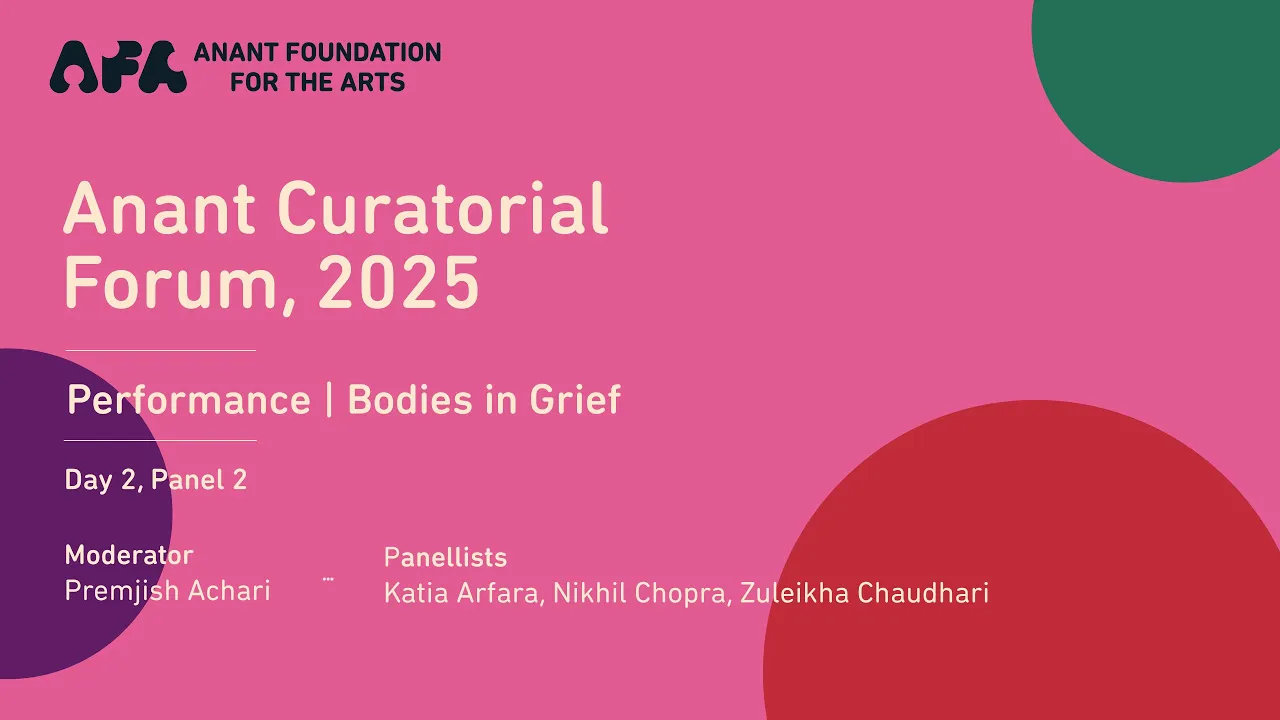
This panel explored the profound implications of grief on the body — what happens to the grieving body under conditions of trauma, hopelessness and violence. Challenging oppositional categories such as mind-body and mind-matter, and defying governing rules on the artistic body, the discussion complicated the conceptualisation, configuration and normalisation of the human and artistic body. Questioning rigid conceptual consolidation, the panel opened expansive possibilities of the body — trapped in a contested cultural field saturated with societal restrictions and conditioned by institutional apparatuses. By engaging with presence, time, body and embodiment, and making the body an archive, the panel aimed to shape the body's destiny through an atlas of fluid shape and porous boundaries.


DAY 2 · PANEL 3
Collective Curating | Who is the Institution?
Departing from the histories of collectivism and the ethos of collective practice, this panel probed the idea of the institution from three different perspectives. Cognizant of the decolonial shift in art, the panellists spoke about their critical engagements across museums, archives, and independent alliances — emphasising the possibilities and challenges of a collective vision in the practices of curating and institution-building.


Edition Overview
The second edition of the Anant Curatorial Forum, held on 22 and 23 March 2025 at the India International Centre, New Delhi, examined pressing issues within the contemporary context of the arts in South Asia. Over two days and six panels, practitioners from across the region and beyond brought their perspectives to questions of the archive and memory, difficult knowledges, intersectional politics, art and ecology, performance and the body, and the possibilities and challenges of collective institution-building.
06 Panels |
|---|
24 Practitioners |
DAY 1 · PANEL 1
Archive | Between Memory and History
This panel interrogated a range of archival dispositions sensed and drawn out in contemporary curatorial practice. Unpacking the notion of the archive, practitioners moved between the exhibition, discursive and pedagogical modes of inquiry — generating new encounters and critical readings of archival lossiness, gaps and absences. The different tactics and interventions retraced the archiving impulse while amplifying the dissonances within histories and collections that can only be heard through an active engagement in the here and now. The tensions between history and memory, forgetting and remembering, constructed and reproduced, found and rendered were eked out in this process, disassembling the time in/of the archive and opening it up to other possible lives and configurations.
DAY 1 · PANEL 2
Politics and Art | Curating Difficult Knowledges
The increasing “democratisation” of technology has facilitated the fracturing of monolithic histories, allowing more politically, culturally and socially diverse articulations to come to the fore. This panel thought through curatorial judgements and strategies that facilitate collective and productive modes of “bearing witness” within spaces where difficult knowledges and public engagement converge. Curators examined different modes of memorialisation, commemoration and historicization — within the traditional frameworks of the museum, memorial sites, and exhibition-making — while questioning their capacities to document, preserve, educate and faithfully represent. The panel addressed curatorial responsibility around the acknowledgement of complicity, the treatment of testimonies, memories, documents, and contestations.
DAY 1 · PANEL 3
Intersectional Politics | Theorising Multiplicity
This panel examined challenges in introducing alternative histories and counternarratives to institutional contexts. How does one curate as an ally, representing a marginal position without occupying it? How are questions of censorship negotiated when presenting sensitive subjects in public spaces? What curatorial strategies ensure a favourable reception of alternative artistic perspectives — especially when the grounds are foreign? Addressing these questions, the panel upheld intersectionality as a process that merits constant attention to its shifting urgencies.
DAY 2 · PANEL 1
Art and Ecology
Curating at the intersection of art and ecology requires an acute awareness — both of nature's intrinsic agency and our role as cultural mediators. Consciousness in curating is more than an intellectual exercise; it is a practice of attunement, a deliberate way of engaging with both the artworks and the ecological contexts in which they emerge. A conscious approach to curating ecology in the arts begins with acknowledging nature not as a backdrop to human activity, but as an active presence with its own narratives, materialities, modes of existence, and consciousness. This panel asked how art can foster relationships of care rather than control, and how it can highlight symbiotic rather than exploitative paradigms.
DAY 2 · PANEL 2
Performance | Bodies in Grief
This panel explored the profound implications of grief on the body — what happens to the grieving body under conditions of trauma, hopelessness and violence. Challenging oppositional categories such as mind-body and mind-matter, and defying governing rules on the artistic body, the discussion complicated the conceptualisation, configuration and normalisation of the human and artistic body. Questioning rigid conceptual consolidation, the panel opened expansive possibilities of the body — trapped in a contested cultural field saturated with societal restrictions and conditioned by institutional apparatuses. By engaging with presence, time, body and embodiment, and making the body an archive, the panel aimed to shape the body's destiny through an atlas of fluid shape and porous boundaries.
DAY 2 · PANEL 3
Collective Curating | Who is the Institution?
Departing from the histories of collectivism and the ethos of collective practice, this panel probed the idea of the institution from three different perspectives. Cognizant of the decolonial shift in art, the panellists spoke about their critical engagements across museums, archives, and independent alliances — emphasising the possibilities and challenges of a collective vision in the practices of curating and institution-building.