
Moving Images is a newly launched screening programme, featuring documentary, experimental and essayistic films on artists, by artists, bringing forth key questions that animate our present. Each screening opens into a conversation, with an invited artist, scholar, filmmaker or curator in dialogue with the audience.
The inaugural weekend, The Question of Making followed four German artists, tracing their methodologies of doing, be it at the city that becomes a studio or a studio that becomes a universe.
Image- Der Affe und ich — Jörg Immendorff (1988)

The Question of Making
Moving Images programme opens by attention to the atmosphere in which the artists practice the many ways of making and remaking the world. Across two evenings, this inaugural weekend follows four German artists, tracing their methodologies of doing, be it at the city that becomes a studio or a studio that becomes a universe.
On Friday, three portraits move indoors, to the table, the easel and the transparent sheet held up to the light: Jürgen Böttcher visiting the aged constructivist Hermann Glöckner, Böttcher's own hand overpainting a borrowed image, and Jörg Immendorff building a nation onto a monumental canvas.
On Saturday, Ulrike Ottinger returns to the Paris of her youth, where a young woman arrives to become an artist and finds a city already at work upon her. Making here is never solitary. It is shadowed by history, by the state, and by the city outside the window.
7th – 8th August, 2026 4:30-8pm
DAY 1 - Artists in the Studio · Friday 7 August 2026
Time | Session | Details |
|---|---|---|
4:30 pm | Tea | |
5:00 pm | Introduction | Opening remarks |
5:10 pm | Film Screening (Approx. 115 min; German with English subtitles; DVD) | A Brief Visit with Hermann Glöckner Woman at the Clavichord (Jürgen Böttcher, 1981, 17 min) Der Affe und ich — Jörg Immendorff (1988, 66min) |
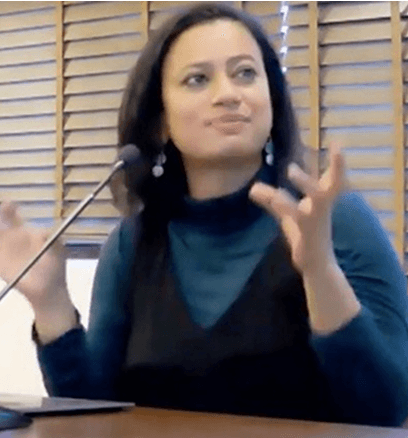
7:15 – 8 pm | Discussion | In conversation with Sukanya Deb and Mallika Visvanathan, moderated by Prachi Satrawal. |
Post-Screening Conversation with


DAY 2 - Cité / Site · Saturday, 8 August 2026
Time | Session | Details |
|---|---|---|
4:30 pm | Tea | |
5:00 pm | Introduction | Opening remarks |
5:10 pm | Screening | Paris Calligrammes (Ulrike Ottinger, 2020) |
7:20–8 pm | Discussion | In conversation with Shukla Sawant and Veena Hariharan, moderated by Prachi Satrawal. |
Post-Screening Conversation with

About the Filmmakers
Ulrike Ottinger
Ulrike Ottinger (b. 1942, Konstanz) is among the foremost figures of New German Cinema and a celebrated artist, filmmaker, painter and photographer. She lived and worked in Paris through the 1960s before beginning her film career in the early 1970s, going on to make a singular body of opulent, essayistic fiction and documentary. She does her own camerawork.
Jürgen Böttcher
Jürgen Böttcher (b. 1931) is widely regarded as the foremost avant-garde filmmaker of East German cinema, and has painted throughout his life under the name Strawalde. His abstract painting was suppressed as “formalist” in the GDR and several of his DEFA documentaries were banned; his films join a tender attention to labour with an experimental fascination for the image. A. R. Penck was among his students.
Film Partner

Goethe-Institut / Max Mueller Bhavan
The Question of Making
Moving Images programme opens by attention to the atmosphere in which the artists practice the many ways of making and remaking the world. Across two evenings, this inaugural weekend follows four German artists, tracing their methodologies of doing, be it at the city that becomes a studio or a studio that becomes a universe.
On Friday, three portraits move indoors, to the table, the easel and the transparent sheet held up to the light: Jürgen Böttcher visiting the aged constructivist Hermann Glöckner, Böttcher's own hand overpainting a borrowed image, and Jörg Immendorff building a nation onto a monumental canvas.
On Saturday, Ulrike Ottinger returns to the Paris of her youth, where a young woman arrives to become an artist and finds a city already at work upon her. Making here is never solitary. It is shadowed by history, by the state, and by the city outside the window.
7th – 8th August, 2026 4:30-8pm
DAY 1 - Artists in the Studio · Friday 7 August 2026
Time | Session | Details |
|---|---|---|
4:30 pm | Tea | |
5:00 pm | Introduction | Opening remarks |
5:10 pm | Film Screening (Approx. 115 min; German with English subtitles; DVD) | A Brief Visit with Hermann Glöckner Woman at the Clavichord (Jürgen Böttcher, 1981, 17 min) Der Affe und ich — Jörg Immendorff (1988, 66min) |
7:15 – 8 pm | Discussion | In conversation with Sukanya Deb and Mallika Visvanathan, moderated by Prachi Satrawal. |
Post-Screening Conversation with
DAY 2 - Cité / Site · Saturday, 8 August 2026
Time | Session | Details |
|---|---|---|
4:30 pm | Tea | |
5:00 pm | Introduction | Opening remarks |
5:10 pm | Screening | Paris Calligrammes (Ulrike Ottinger, 2020) |
7:20–8 pm | Discussion | In conversation with Shukla Sawant and Veena Hariharan, moderated by Prachi Satrawal. |
Post-Screening Conversation with
About the Filmmakers
Ulrike Ottinger
Ulrike Ottinger (b. 1942, Konstanz) is among the foremost figures of New German Cinema and a celebrated artist, filmmaker, painter and photographer. She lived and worked in Paris through the 1960s before beginning her film career in the early 1970s, going on to make a singular body of opulent, essayistic fiction and documentary. She does her own camerawork.
Jürgen Böttcher
Jürgen Böttcher (b. 1931) is widely regarded as the foremost avant-garde filmmaker of East German cinema, and has painted throughout his life under the name Strawalde. His abstract painting was suppressed as “formalist” in the GDR and several of his DEFA documentaries were banned; his films join a tender attention to labour with an experimental fascination for the image. A. R. Penck was among his students.
Film Partner
Goethe-Institut / Max Mueller Bhavan
AFA FILMS
The Question of Making
Moving Images is a screening programme that brings film into dialogue with the questions animating contemporary art practice. The inaugural weekend in August’26 followed four German artists, tracing their methodologies of making.
